Recovering from Burnout Crashes: How to Handle Chronic Fatigue and Social Judgment
Summary: Dealing with external and internal judgment on top of struggling with burnout or chronic fatigue only makes things harder. This post explores encountering external and internal judgment, and how I have moved towards understanding burnout and chronic fatigue as systemic issues and have learned to respect and listen to what my body is telling me.
Encountering External Judgment: The Dog Park Incident
I had an encounter with a neighbour in the dog park 2 days ago where I ended up leaving in tears. This surprised me, as I didn’t think I was that upset by the conversation, until another neighbour named that she could see how much I was being impacted. The tears just suddenly came.
I had been sharing how I found my work as a public school teacher challenging, in that I found it difficult to see children and families struggling, knowing that the issues were systemic, and thus far beyond my capacity to alleviate. One of the main reasons I had to change careers was that I needed work in which I could move slower and feel like I was making a difference without burning myself out.
In this neighbour discussion, they were suggesting that people struggling just need to hit rock bottom as a lesson and learn how to figure things out. They also shared how they don’t agree with a mother allowing her 50 year old son to live in her basement.
I was able to state that I disagree, that I don’t see things the same way, and to explain some of my points… but I think this person’s viewpoint was impacting me more than I was consciously aware. In part, I find this to be the dominant viewpoint in our North American society, and it has felt personally harmful. This way of thinking is, in my opinion, what led me to burnout and chronic fatigue. I see this model as a way of blaming the individual rather than being curious about what systemic issues are contributing to a lack of thriving. Sometimes I wonder if it is a way for someone to protect themselves from not having to feel pain about the suffering of others, or perhaps to protect from the discomfort of not knowing or having answers.
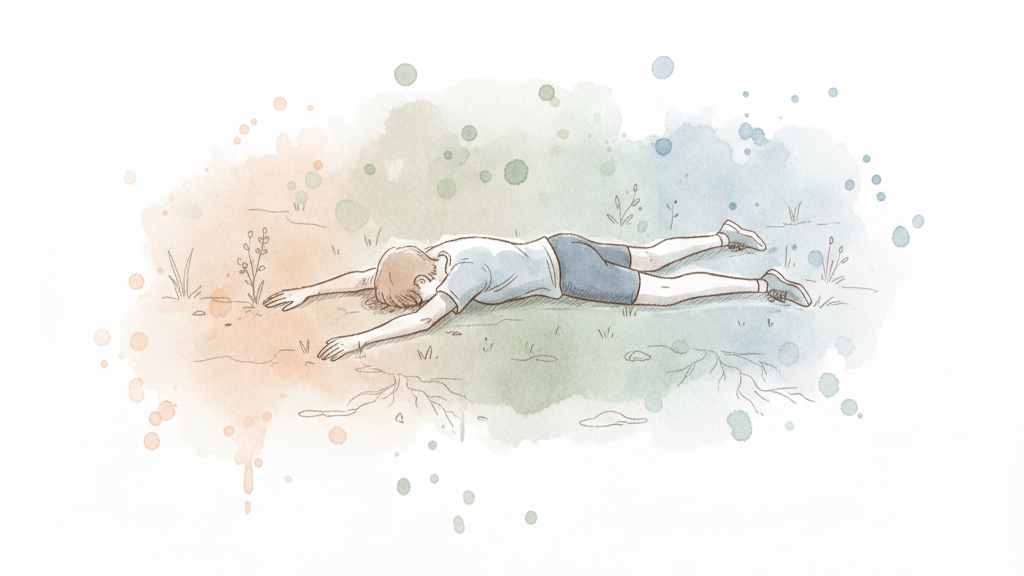
This conversation timed with the tailend of an energetic crash for me. While I have arguably had chronic fatigue my entire life, I experienced a severe experience of it for about 2 years (2023-2025). From 2024 until now, I have been able to slowly improve my health so that I rarely experience crashes, but this recent one had been almost 2 weeks. So it was in this context that I was hearing my neighbour speak.
The Invisible Struggle: Why We Internalize "Pulling Up Your Bootstraps"
Whether it’s overwhelm, burnout, or chronic fatigue… these are all invisible issues. It’s easy for someone to think you just need to “pull up your bootstraps.” This message is so internalized, it was a hard won rewiring practice to stop criticizing myself in this way. The number of fear based panics I have had in my lifetime about how I am going to financially survive is innumerable. That critical part of me, with its internalized messaging and fear of external judgment, just wants to try to protect me. It wants to light a fire of fear with the hope that it can make me function so that we will be okay.
Compassion Over Judgment: The Environment vs. The Individual
What I was trying to say to my neighbour, is that I believe we have to be careful not to judge what we see externally, as we cannot know all the variables at play. For example, someone could be unknowingly deficient in certain vitamins or minerals, have mercury toxicity, have difficulty metabolizing glucose, or be suffering from sleep issues. The list goes on. There are so many biological factors that often are not addressed in our public health care system, and a whole field of metabolic psychiatry that is addressing the biological underpinnings of physical and mental health issues. I have been on a quest since my teenage years to find the healthiest way to live, and it has been a long road of slowly figuring these things out. This can take a long time, especially when someone is struggling with a lack of energy in their system, this also means a lack of cognitive energy to think and a lack of motivation as the system is trying to conserve energy.
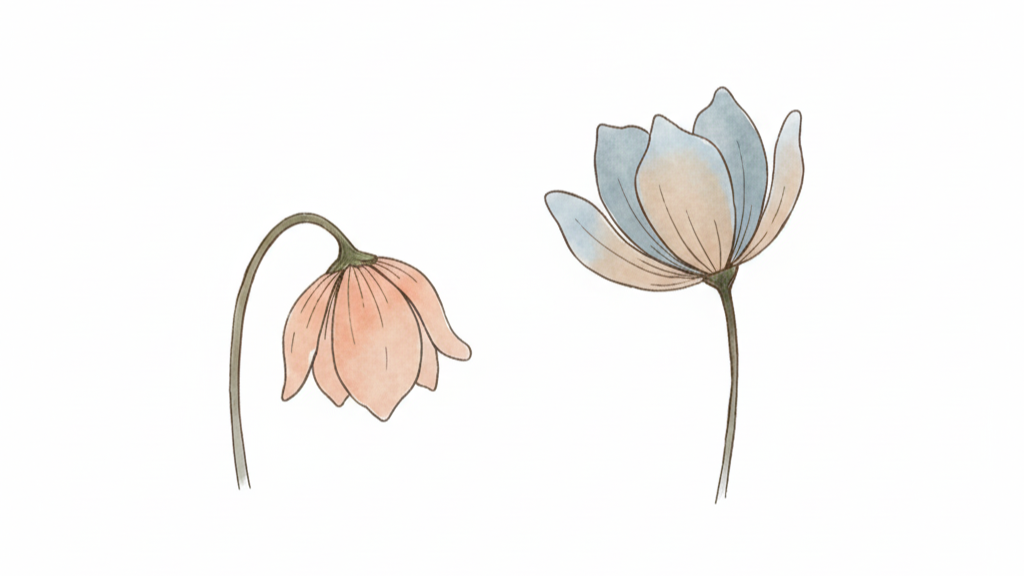
From my perspective, rather than judging, I think it would make more sense to have compassion and curiosity, and to be extremely grateful that you are not suffering in that same way. I believe everyone wants to thrive and will naturally do so if able. I do not believe it is a choice they are making. In my own experience, when I’ve been fortunate enough to find ways to heal and obtain more energy, I naturally want to work and get things done. Having energy is an immense blessing, and not one to which everyone has access. When a flower is wilting, we don’t blame the flower. We look at the environment and assess what is causing the wilting. It also reminds me of the concept behind the Rat Park study, in which rats would become addicted to morphine, but only when they didn’t have other activities to engage in and access to socializing. As soon as these latter resources were provided, the morphine was not as attractive.
Really, I realized in retrospect, I felt sad because I deeply feel for people struggling, and I see and have lived how hard it can be. To have people judge you for it only makes it worse. And even then, I know my situation is way more fortunate than so many. I am 45, and I wish I could live in my parents’ basement. I recently considered doing so, and am grateful that I was able to from age 36-39, which allowed me the possibility to switch careers. I knew people would judge me for it, but fortunately I knew better and was confident in that choice. As someone who has really struggled with chronic fatigue, if living in my parents’ basement was a healthier option for me, I would jump on it. As well, this idea of needing to live apart from our families in nuclear offbranches is such a particular cultural viewpoint. Who is anyone to judge or determine what is the best arrangement for anyone else? I could easily argue the benefits of staying with family, and the potential harm of feeling that one needs to move away.
Hard Won Lessons of Non-Judgment for Burnout and Chronic Fatigue
In any case, this is something I will continue to write about as it has been a large part of my life experience. But for now, suffice it to say, my most recent experience of crashing has taught me yet again the same lessons that have been very hard won over the past few years:
There is a reason this is happening: If I’m crashing, there is a reason for it, even if I can’t yet (or ever) figure it out. I can trust that my body is shutting down out of its own wisdom. Noticing that I don’t have any energy or motivation is a sign that my body needs to rest.
I will come out of this: I can trust, no matter how scary and frustrating it can be, that my body will come out of this once it has rested and repaired. It makes sense that I don’t like this, want it to be over, and feel triggered into survival panic.
I can learn from this: There is something for me to learn from this. My body is telling me that something was too much, and once I figure it out, I can use this information to recalibrate going forward so that I can better prevent these crashes.
This is not my fault: I am not bad for crashing. This is not a sign of not pushing hard enough, but rather a sign that I wasn’t going slowly enough. It is not my fault that my body crashes and that I can’t output at high levels.
Frequently Asked Questions
How do I handle judgment during a burnout crash?
Understand that external judgment is often a reflection of someone else's discomfort, judgment, or fear. Recognize the parts of you that also have these issues. Think about how you would treat someone else in this same situation. Would you push them or have compassion? See if you can try to trust your body a little bit more, knowing that like with being physically ill, it will recover with time and care. Be patient with yourself, it takes practice to approach burnout with compassion and trust.
What is the difference between laziness and a burnout crash?
I recommend you read Laziness Does Not Exist, by Devon Price. I believe that humans naturally want to thrive, which includes work and play, when they are healthy. If you are feeling “lazy,” I would invite you to consider that the word lazy is used as a judgment, when in reality, your body may just need rest. Compassion and curiosity will take you much further than judgment. Ask yourself, am I speaking to myself the way I would to a dear friend? Two phrases I use when I’m in a crash are: “I know what energy feels like and this is not it,” and “We don’t evaluate our life from a low place.” This helps me to acknowledge that I am lacking energy (as opposed to being “lazy”) and to remember that when I am low energy, this also means I do not have the cognitive capacity to be assessing my life. I find many of us have a tendency to try to evaluate and judge ourselves and our life as a way to try to figure out or solve an experience of low energy.
Why are burnout and chronic fatigue considered systemic issues?
Individual struggles are often symptoms of an environment that demands high output without providing adequate resources or social support, much like the findings in the Rat Park study. Everything is systemic. We don’t exist in a vacuum or separate from our surroundings. In the same way you would alter the environmental circumstances to help a child thrive, start to look at your own circumstances and get curious about what needs to change to better support you and your body.
Author Bio
Nicole Haworth, RCC, CCC Nicole Haworth is a Registered and Canadian Clinical Counsellor offering online therapy throughout Canada. With a practice rooted in anti-oppressive and systemic frameworks, she specializes in helping adults navigate depression, anxiety, high sensitivity, self-esteem, boundaries, relationship issues, and overwhelm/burnout. She integrates Internal Family Systems (IFS), EMDR, and psychedelic-assisted therapy to help clients increase their self-knowledge and heal underlying traumas/patterns to improve their health, confidence, and boundaries. In her personal life, she is an avid learner of lifestyle practices that improve healthspan, is devoted to both psychedelic and spiritual practice, and can be found often either reading or walking her sweet little dog.