EMDR Therapy (Eye Movement Desensitization and Reprocessing): What it is and how it can help
What is EMDR?
The basics of EMDR are:
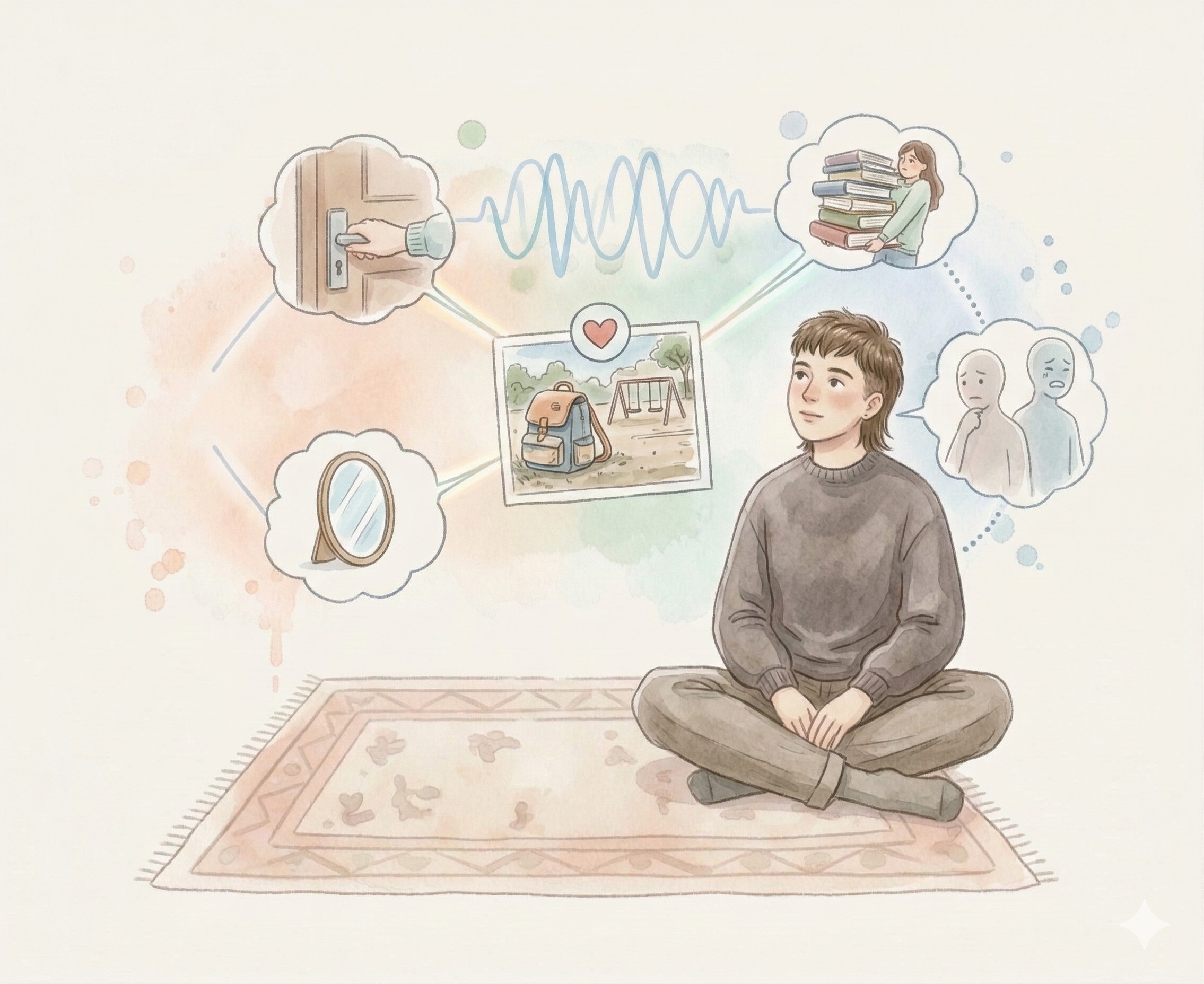
It is a therapy to reprocess, desensitize, and integrate stuck memories/triggers that are causing you distress in the present. You do not need to know which memories are causing you current distress in order to address the current issue.
It uses bilateral stimulation (BLS) to reprocess memories:
BLS is rhythmic, alternating sensory input to both sides of the body or brain, such as eye movements, taps, or tones.
It does not require or even encourage reliving or retelling the experience, but rather starts with an activation of the memory by evoking a snapshot image, emotion, and sensation, and then immediately employing BLS to process the activation.
How Does EMDR Work?
EMDR hypothesizes that our brains are naturally designed to process and integrate these experiences. It refers to this as the adaptive information processing (AIP) system, and suggests that BLS activates this system.
The AIP suggests that BLS allows the brain to naturally create associations, aiding in the processing of content, and naturally creating connections to current updated information.
There are a few proposed mechanisms of action regarding how BLS helps to process these memories/triggers:
Working Memory Taxation: holding the memory/activation in mind while also having to focus on the BLS can tax our working memory, which then decreases the vividness and emotionality of the memory. This mechanism is the most supported by research currently.
Memory Reconsolidation: by reactivating the memory, it is in a more malleable form and can be updated, transformed, and reconsolidated so that it moves from an unconscious trigger to a non-triggering memory which has been processed and integrated.
Orienting Response: we are programmed to respond to novel stimuli, and it is suggested to be activated by BLS, which then may lead to reduced activation.
REM Sleep: there are questions as to whether the eye movements have any relation to the same eye movements that happen during REM sleep, during which our brain processes emotional memory content and creates new associations.
What Actually Happens in an EMDR Session?
EMDR is a very procedural therapy in that there are clear delineated steps. While there can be variation for specific circumstances, this is a general overview of the foundational steps:
Before our first session, you will fill out a few forms to assess if EMDR is a good fit for you.
At our first session, we will assess your capacity for emotional regulation and establish grounding and containing strategies if needed. We will also address any concerns before we begin EMDR. Depending on time, we may get into some of the next steps in this first session.
Whether in the first session or the following sessions, we then go through a series of questions to assess the issue you would like to focus on, discover associated memories, and agree on a target memory with which to begin reprocessing.
We then proceed to activate the memory by finding associated images, emotions, and sensations. Once activated, we proceed with BLS to desensitize and reprocess the memory.
Once the memory has been fully processed, we move into installing an associated positive belief.
We end with a body scan, and then can proceed to the next memory associated with the presenting trigger if needed.
After all past memories have been processed, we process any remaining present triggers and then install positive future templates.
My Personal Experience with EMDR
There has been research demonstrating the effectiveness of EMDR since 1989, of which I can share more in the FAQ at the end of this post. However, speaking personally, I have found EMDR incredibly effective in my own life and in that of my clients.
I was actually quite averse to and skeptical of EMDR. It seemed too procedural, and I didn’t trust it was effective. It took about 2 years before I finally read the foundational EMDR book, at which point I was quite sold. Yet, even once I was in EMDR training, I still had a lot of skepticism. However, I experienced a complete erasure of a trigger from one session. Since then, I have engaged in my own personal EMDR therapy and have been blown away by the results. As well, I can state the same for my clients, in that I’ve seen how quickly EMDR can reprocess and desensitize traumatic memories.
Suggested EMDR Resources
Frequently Asked Questions
Is EMDR only for "Big T" Trauma (like accidents or violence)?
Not at all. While EMDR is famous for treating major events, it is incredibly effective for what we call "small t" traumas—the relational issues, low self-esteem, and chronic stressors that accumulate over time. If you feel stuck in old patterns, struggle with imposter syndrome, or feel "frozen" by high-functioning anxiety, EMDR can help reprocess the underlying experiences that created those triggers. It’s about reprocessing, desensitizing, and integrating those traumas, regardless of how "big" or "small" the original event seems.
Will I lose control or be "hypnotized" during the session?
This is a common concern, especially for those who value boundaries and agency. You are fully awake, alert, and in control throughout the entire process. Unlike hypnosis, where you might be in a trance-like state, EMDR requires you to have "one foot in the present and one foot in the past." You can stop the process at any time. My role is to act as a grounded guide, ensuring you stay within your "window of tolerance" while we work together.
How do I know if I’m "ready" for EMDR?
You will be sent some assessment forms to fill out before your first session in order to make sure you are able to engage in EMDR. Then, in our preparation phase, we focus on building your capacity for emotional regulation. We establish grounding and containing strategies if necessary so you feel safe before we ever touch a traumatic memory. We also address any concerns you may have, and we do not begin until we both feel you are ready.
How is EMDR done virtually?
EMDR is very effective via telehealth. The convenience of doing this work from a safe, private space at home actually can help you stay more grounded and relaxed. We use a specialized visual tool on the screen or tactile "butterfly taps" that you can do yourself. The results and the neurological integration remain the same, whether we are in the same room or connecting through a screen.
Is EMDR Evidence-Based?
Yes, EMDR is a gold-standard, evidence-based treatment. It has moved from being a breakthrough discovery in the late 1980s to receiving the highest level of recommendation from major global health organizations.
The evidence for its effectiveness is built on three main pillars:
High Recovery Rates: Research shows that 84% to 90% of single-trauma victims no longer meet the criteria for PTSD after just three 90-minute sessions.
Speed and Efficiency: Studies consistently find that EMDR can achieve similar or superior results to traditional talk therapy (like CBT) but often in fewer sessions and without the need for between-session homework.
Global Recognition: Because of the vast amount of peer-reviewed data, EMDR is formally recommended as a first-line treatment by the World Health Organization (WHO), the American Psychological Association (APA), and the VA/DoD.
Anxiety, Depression, and Self-Esteem
Depression: Recent meta-analyses indicate that EMDR significantly reduces depressive symptoms, particularly when they are fueled by underlying adverse life experiences.
Anxiety and Panic: Clinical trials demonstrate that the "desensitization" phase effectively lowers the physiological arousal associated with panic disorders and generalized anxiety.
Self-Beliefs: Research supports the "Installation" phase's ability to reformulate negative self-cognitions (e.g., "I am not enough") into adaptive, positive beliefs.
Source: Efficacy of EMDR for Depression (ResearchGate) | VA National Center for PTSD
Effectiveness for PTSD
EMDR is one of the most extensively researched treatments for PTSD, often providing significant relief in a shorter timeframe than traditional talk therapies.
Single-Event Trauma: Studies show that 84% to 90% of single-trauma victims no longer meet the diagnostic criteria for PTSD after just three 90-minute sessions.
Multiple Trauma: Research conducted with Kaiser Permanente found that 100% of single-trauma victims and 77% of multiple-trauma victims were free of a PTSD diagnosis after six 50-minute sessions.
Combat Veterans: In studies with military personnel, 77% of combat veterans achieved remission from PTSD in approximately 12 sessions.
Source: The Role of EMDR in Medicine (PMC) | EMDR Institute Research Overview
Nicole Haworth, RCC, CCC is a Registered and Canadian Clinical Counsellor offering online therapy throughout Canada. With a practice rooted in anti-oppressive and systemic frameworks, she specializes in helping adults navigate depression, anxiety, high sensitivity, self-esteem, boundaries, relationship issues, and overwhelm/burnout. She integrates Internal Family Systems (IFS), EMDR, and psychedelic-assisted therapy to help clients increase their self-knowledge and heal underlying traumas/patterns to improve their health, confidence, and boundaries. In her personal life, she is an avid learner of lifestyle practices that improve healthspan, is devoted to both psychedelic and spiritual practice, and can be found often either reading or walking her sweet little dog.